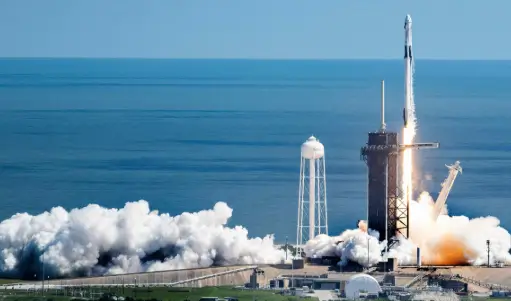
The rise of space startups reflects converging economics, accessible launch costs, and enabling tech. Nimble teams pursue propulsion, manufacturing, and cadence optimization, aided by reusable systems and modular payloads. Public-private collaboration clarifies missions, while regulation and supply chains shape pace and cost. Satellites evolve into on-orbit services, opening new markets and data-driven risk management. The environment rewards experimentation and diverse entrants, but funding, regulation, and supply constraints keep the trajectory uncertain, inviting closer scrutiny of the underlying drivers.
What Sparked the Space Startup Wave and Who’s Driving It
The space startup wave was sparked by a convergence of favorable economics, accessible launch costs, and enabling technologies that democratize space access. Investors channeled innovation funding into nimble teams, while public-private collaboration clarified mission scopes. Entrenched regulatory hurdles shape pace and risk, yet diverse entrants—universities, incumbents, and newcomers—drive experimentation, resilience, and a bias toward rapid, data-driven progress for space-enabled freedom.
How Startups Shrink Costs and Accelerate Access to Orbit
How do startups shrink launch costs and accelerate access to orbit? They pursue cost reduction strategies that optimize propulsion, manufacturing, and launch cadence while leveraging standardized components and reusable systems. Data-driven risk management guides decisioning, reducing schedule slippage. Access accelerators include shared rides, vertical integration, and modular payload deployment.
Outcomes: lower barriers, faster orbit, and scalable, freedom-focused innovation.
From Satellites to On-Orbit Services: New Use Cases and Markets
New use cases and markets are emerging as satellites underpin on-orbit services that extend system lifetimes, increase revenue streams, and reduce ground infrastructure requirements. The trend leverages satellite constellations and orbital servicing to deliver persistent, scalable capabilities, from in-situ maintenance to dynamic capacity trading. Investors seek data-driven risk assessment, clear ROI paths, and interoperable platforms that enable rapid, low-cost experimentation and market diversification.
See also: https: stocksmarkettips
Barriers and Signals: Navigating Regulation, Supply Chains, and Funding Options
Regulatory, supply-chain, and funding environments shape the feasibility of space-startup ventures as decisively as technology itself, demanding rigorous risk assessment and proactive compliance planning.
The landscape highlights regulatory hurdles and funding options as critical levers, with clear signals from policy development and investor appetite.
Supply chain resilience emerges as a gating factor, dictating schedule certainty, cost control, and operational sovereignty for bold, freedom-oriented ventures.
Frequently Asked Questions
What Is the Typical Funding Timeline for Space Startups?
Funding timelines typically span seed through Series A within 12–24 months, then subsequent rounds aligned with milestones. A capital strategy emphasizes milestone-based raises, risk-aware planning, and disciplined burn, balancing regulatory and technical milestones with investors’ demand for measurable progress.
How Do Space Startups Validate Technology Before Flight?
Validation testing and propulsion integration are the core steps; space startups verify hardware performance through ground tests, subsystem interoperability, and end-to-end simulations before flight, emphasizing risk-aware data-driven decisions and scalable prototypes for a freedom-loving audience.
What Skills Are Most in Demand in Space Ventures?
In space ventures, in-demand skills center on systems engineering, avionics, and data analytics. Professionals adept at Regulatory compliance, space manufacturing, propulsion miniaturization, and Satellite servicing drive risk-aware, cost-efficient development and freedom-oriented innovation across complex programs.
How Do Customers Influence Product Roadmaps in Space?
Customer feedback shapes priorities; it guides launch cadence and feature timing while balancing product market fit vs. mission requirements. Stakeholder alignment ensures decisions stay data-driven, risk-aware, and pragmatic for an audience seeking freedom.
What Are the Most Common Failure Modes for Early Launches?
Failure modes for early launches commonly arise from guidance, propulsion, and thermal anomalies. Early launches risk delays; funding timelines constrain iterations. Validation before flight remains essential to reduce non-recurring design changes, ensuring disciplined testing, risk awareness, and quantified performance.
Conclusion
The space startup wave reflects converging economics, rapid tech maturation, and patient capital, enabling nimble firms to test business models with measured risk. Data-driven decisions, modular architectures, and reusable systems are trimming costs and cycle times while expanding addressable markets. Regulation and supply chain fragility remain meaningful, but adaptive strategies and diversified funding reduce exposure. The sector advances like a comet—bright, targeted, and capable of reshaping trajectories across aerospace and data services.